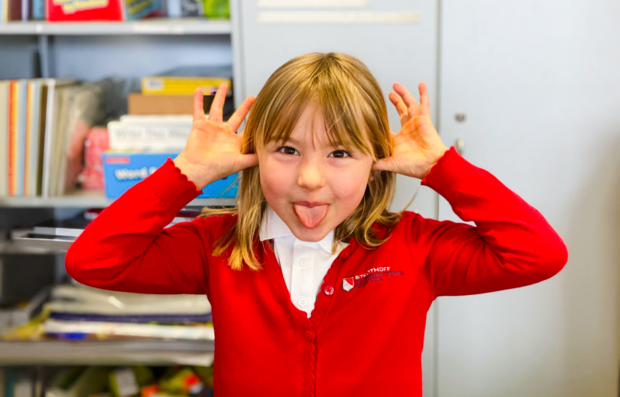
Spend a little time around children and you’ll quickly notice something important: they love to be silly. Whether it’s funny voices, unexpected jokes, or moments of pure goofiness, these small bursts of laughter are more than just “off-task” behavior—they’re part of how kids connect, create, and feel comfortable being themselves.
In school, we absolutely value focus, structure, and meaningful learning. But we also know that when students feel relaxed and happy, they are far more open to taking risks, sharing ideas, and engaging deeply. A little silliness can go a long way in building confidence and creating a classroom where students feel safe to participate.
Silliness is also closely tied to creativity. When children play with ideas, exaggerate, and imagine the unexpected, they’re developing flexible thinking—the kind that helps them problem-solve, collaborate, and approach learning in new ways. And just as importantly, shared laughter helps build relationships. A classroom that laughs together often learns better together.
Of course, we also understand that there is a time and a place for everything. Silliness can’t happen all the time, and part of growing up is learning when it’s appropriate to focus and when it’s okay to let loose a little. Finding that balance is key, both at school and at home.
Because this doesn’t just matter in the classroom. When children are given space to be playful at home as well, it strengthens family connections, reduces stress, and reminds them that joy and learning can go hand in hand.
In the end, letting kids be silly isn’t about lowering expectations—it’s about creating an environment where they can be fully themselves. And when that happens, learning becomes not only more effective, but also a lot more fun.